What Is SEO? A Complete Beginner's Guide for Malaysian Businesses
What SEO means in plain English, how Google decides who ranks, how long it takes, what it costs, and a checklist you can start on today.
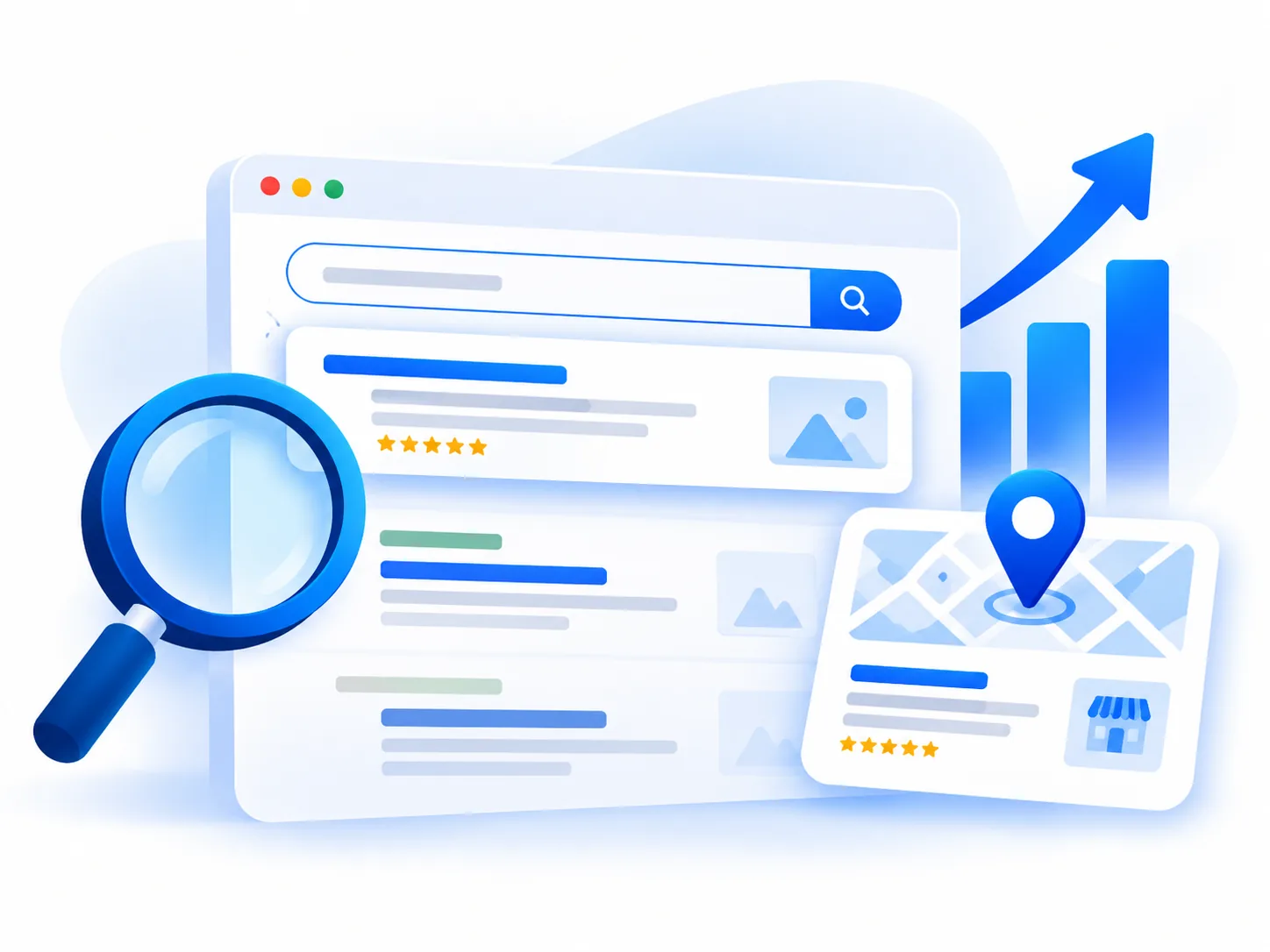
If you run a business in Malaysia, you've probably heard someone say "you need SEO". Maybe an agency cold-called you, maybe a friend mentioned it. But what does it actually mean — and is it worth your money?
This guide explains SEO in plain English. No jargon, no hype. By the end you'll understand what SEO is, how Google decides who shows up first, how long it takes, roughly what it costs, and what you can start doing yourself this week.
What SEO means (the simple version)
SEO stands for Search Engine Optimisation. In simple words: it's the work of helping your business show up on Google when people search for what you sell.
Think of Google as the directory board in a giant shopping mall. Every day, thousands of people walk up to that board and ask: "Where can I get my aircond serviced in Johor Bahru?" or "best wedding photographer KL".
Google has to decide which shops to point them to. SEO is everything you do to make your shop the one Google is happy to recommend — by making your website clear, fast, useful and trustworthy.
The key idea: people searching on Google are already looking for what you sell. SEO puts you in front of them at exactly the moment they're ready to buy.
Why SEO matters for Malaysian businesses
Most customers now search before they buy — even for a local shop they'll visit in person. They check Google, look at the website, read the reviews on Google Maps, and then decide.
If your business doesn't show up, your competitor's does. It's that simple.
Here's why SEO is different from paying for ads:
- Ads stop the moment you stop paying. SEO keeps bringing visitors after the work is done.
- You don't pay per click. When someone clicks your normal (non-ad) Google result, it costs you nothing.
- People trust organic results. Many searchers scroll past the "Sponsored" results and click the regular ones.
- It compounds. Each good page you add can keep attracting visitors for months or years.
That doesn't mean ads are bad — they're great for quick results. The best approach for many businesses is ads for immediate enquiries, and SEO to slowly reduce how much you depend on ads.
How Google decides who ranks first
Google's exact formula is secret, but the basic process is well known. It happens in three steps:
- Crawling — Google sends automated programs (often called "Googlebot") to visit web pages and follow links, discovering what's out there.
- Indexing — Google reads each page and stores it in a giant library, understanding what the page is about.
- Ranking — when someone searches, Google picks the pages from its library that best answer that search, and orders them.
To decide the order, Google looks at hundreds of signals. The most important ones, in plain English:
- Relevance — does your page actually answer what the person searched for?
- Quality — is the content helpful, accurate and written for people, not just for Google?
- Trust — do other reputable websites mention or link to you? Do you have real reviews?
- Experience — does your site load fast, work well on phones, and feel safe to use?
- Location — for local searches, how close you are to the person searching matters a lot.
The 4 main types of SEO
SEO isn't one single task. It's usually split into four areas.
1. On-page SEO
This is about the content on each page of your website:
- Using the words your customers actually search for (these are called keywords)
- Clear page titles and headings
- Helpful, specific content — not three vague sentences
- Good descriptions that make people want to click
2. Technical SEO
This is the "behind the scenes" health of your website:
- Fast loading speed, especially on mobile data
- Working properly on phones
- A secure website (the padlock / HTTPS)
- No broken pages, and a clear structure Google can crawl easily
- A sitemap — a list of your pages that helps Google find them
3. Off-page SEO
This is about your reputation across the internet:
- Other websites linking to yours (called backlinks) — like a recommendation
- Mentions of your business on directories, news sites and social media
- Quality matters far more than quantity. A few links from respected websites beat hundreds of spammy ones.
4. Local SEO
For businesses that serve a specific area — a café in Johor Bahru, a clinic in Skudai, a contractor in Iskandar Puteri — local SEO is often the most important part:
- A complete Google Business Profile (the listing that shows on Google Maps)
- The same business name, address and phone number everywhere online
- Real customer reviews, and replying to them
- Pages on your website that mention the areas you serve
What are keywords?
A keyword is simply what people type into Google. For example:
| What the customer types | What they probably want |
|---|---|
| "what is seo" | To learn — not ready to buy yet |
| "seo company johor bahru" | To hire someone locally |
| "aircond service near me" | A service, right now, nearby |
| "best cafe skudai" | To compare and choose |
Good SEO starts with understanding which searches your customers make, and what they want at that moment. A page trying to rank for everything usually ranks for nothing — each important service deserves its own page.
How long does SEO take?
Honest answer: SEO is more like planting a tree than flipping a switch.
As a rough guide, many websites start to see early movement within about 2–3 months, and more meaningful results after around 6 months or longer. It depends on:
- How competitive your industry and area are
- How old and healthy your website already is
- How much useful content you have
- Whether competitors are also investing in SEO
If anyone promises you "page one in two weeks", be careful.
Can anyone guarantee a #1 ranking?
No. Google decides the rankings — no agency controls them. Anyone who guarantees you the #1 spot is either misleading you, or talking about a keyword nobody searches for.
What a good SEO partner can promise is doing the right work consistently, tracking your progress, and explaining clearly what's happening each month.
How much does SEO cost in Malaysia?
Prices vary a lot depending on the scope and competition. SEO is usually charged monthly, because it's ongoing work rather than a one-time job.
At SMHG, our SEO packages start from RM1,200 per month, with growth and advanced packages for more competitive industries. You can see what's included in each on our pricing page.
When comparing quotes, ask each provider:
- What exactly will you do each month?
- How will you report progress to me?
- Who owns the content and accounts if we stop working together?
SEO vs paid ads: which should you choose?
| SEO | Google / Facebook ads | |
|---|---|---|
| Speed | Slow to start (months) | Fast (days) |
| Cost per click | Free | You pay every click |
| When you stop paying | Traffic keeps coming for a while | Traffic stops immediately |
| Best for | Long-term, steady enquiries | Quick results, promotions, testing |
Many businesses use both: ads to bring enquiries now, SEO to build a steady stream of free visitors for later. Read more about our digital marketing and SEO services.
Common SEO mistakes we see
- A beautiful website that says almost nothing. Google can't rank a page it can't understand.
- One page for every service. A single "Services" page listing ten things rarely ranks for any of them.
- Ignoring mobile. Most local searches happen on phones.
- No Google Business Profile — or one with the wrong opening hours.
- Buying cheap backlinks. This can get your site penalised.
- Changing page titles and URLs randomly after they already rank. Small "improvements" to a page that's already ranking can cause it to drop.
A simple SEO checklist you can start today
You don't need an agency to get started. Try these this week:
- Search for your own business on Google and Google Maps. What do customers see?
- Claim and complete your Google Business Profile — hours, photos, services, phone number.
- Ask 3 happy customers for a Google review.
- Check your website on your phone. Is it fast? Is the WhatsApp or call button easy to find?
- Write down the 5 things customers search for to find a business like yours. Does your website clearly mention each one?
- Give each main service its own page with a clear title, like "Aircond Servicing in Johor Bahru".
Frequently Asked Questions
Is SEO worth it for a small business?
For most small businesses that customers search for on Google, yes — especially local SEO. If your customers never search online for what you sell, SEO may not be your best first step, and a good partner should tell you that.
Can I do SEO myself?
Yes, the basics are very doable: a complete Google Business Profile, reviews, a fast mobile-friendly website and clear pages for each service. Professional help becomes more useful in competitive industries or when you want to grow faster.
Do I need a new website for SEO?
Not always. Sometimes improving your current website is enough. But if it's very slow, hard to edit, or not mobile-friendly, rebuilding it can make SEO much easier.
What's the difference between SEO and Google Ads?
Google Ads are paid placements marked "Sponsored" — you pay for each click and traffic stops when you stop paying. SEO earns the regular (organic) results, which cost nothing per click but take longer to build.
The bottom line
SEO is simply the work of helping Google understand, trust and recommend your business. It takes patience, but it builds something that keeps working for you — a steady flow of customers who were already looking for what you sell.
If you'd like a second opinion on your website, we're happy to take a look and give you an honest answer.